OpenAI is releasing a new version of its Codex desktop software today. The latest Codex update adds three key features that extend its use beyond agent coding.
Today’s release marks the beginning of a shift for the Codex. The app is moving from a strictly developer-focused state to more general utility as an AI tool on the Mac.
Codex adds desktop background usage, an in-app browser, and image generation
Today’s Codex release includes three major features that extend the capabilities of the desktop application.
These include using a Codex-powered backend, an in-app browser built on OpenAI’s Atlas, and image generation powered by gpt-image-1.5 – all without leaving Codex.
OpenAI specifically emphasizes the “backend” aspect of Codex’s computing capabilities. Codex can use desktop applications on Mac in the background while you are actively using your machine continuously.
“Multiple agents can run in parallel without interfering with your work in other applications,” says OpenAI. “For developers, this is useful for trying and iterating front-end changes, testing applications, or working on applications that don’t expose an API.”
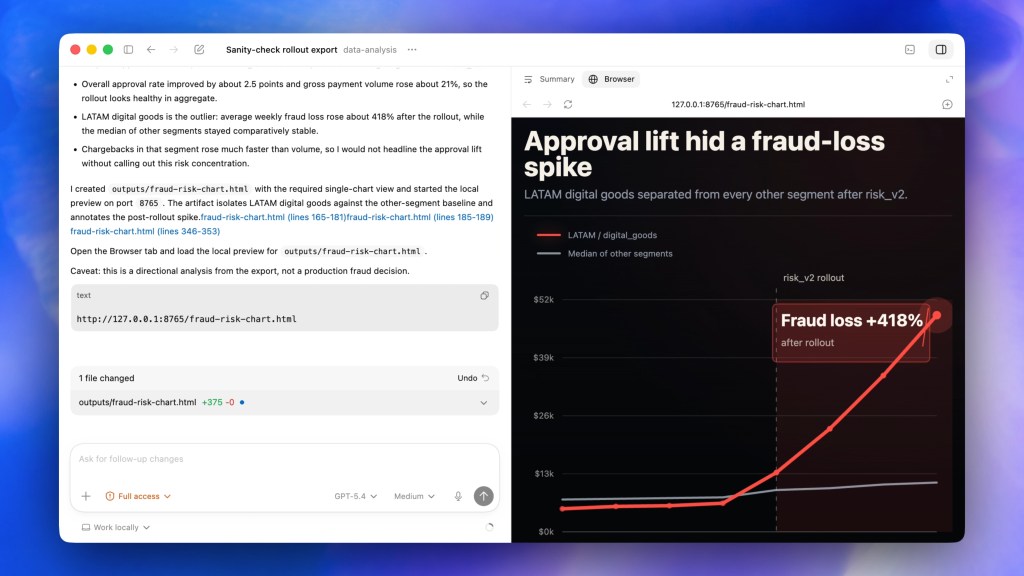
Last fall, OpenAI released its first AI-focused web browser with the launch of ChatGPT Atlas. Today, Codex brings Atlas technology to the stack with its own in-app browser.
OpenAI says Codex’s in-app browser will let you “comment directly on pages to give precise instructions to the agent.”
“This is useful for frontend and game development today, and over time we plan to expand it so that Codex can fully command the browser outside of web applications on localhost,” the company adds.
Image-gen is also now integrated with Codex. This eliminates the need to switch to the ChatGPT app to create AI-generated images. For developers, OpenAI expects the image-gen within Codex to be particularly useful for developing visual concepts and more based on screenshots and code.
111 more Codex Plugins, automation and memory
In addition to these three core features, OpenAI releases a curated collection of 111 additional Codex Plugins. These combine skills, application integrations and MCP servers to extend the capabilities of Codex.
Codex includes these new software development support features beyond agent coding:
The app now includes support for addressing GitHub review comments, launching multiple terminal tabs, and connecting to remote devboxes over SSH in alpha. It also lets you open files directly in the sidebar with rich previews for PDFs, tables, slides, and documents, and use a new summary panel to track agent plans, resources, and artifacts.
Automation also has a lot of possibilities in the new version of Codex:
We’ve extended automations to allow reuse of existing chat threads while preserving previously established context. Codex can now schedule future tasks for itself and wake up automatically to continue a long-term task, potentially for days or weeks.
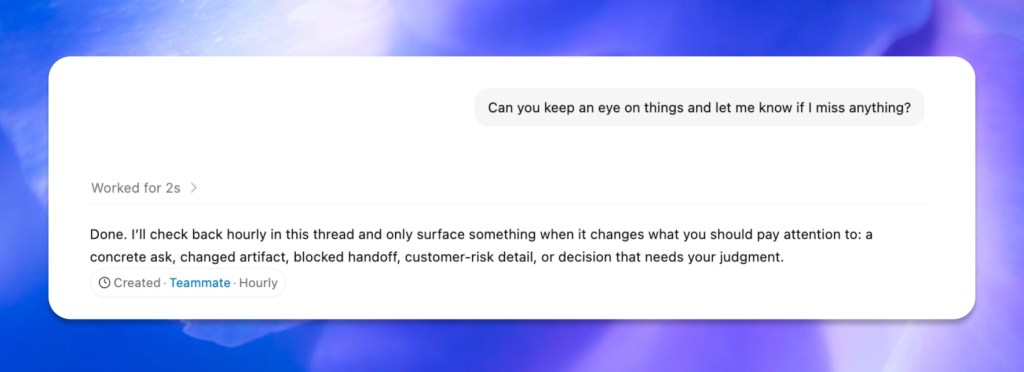
Finally, Codex gets a “memory preview” similar to the ChatGPT implementation. Codex “can remember useful context from previous experience, including personal preferences, adjustments, and information that took time to gather.”
Memory will allow Codex to make useful suggestions based on ongoing projects:
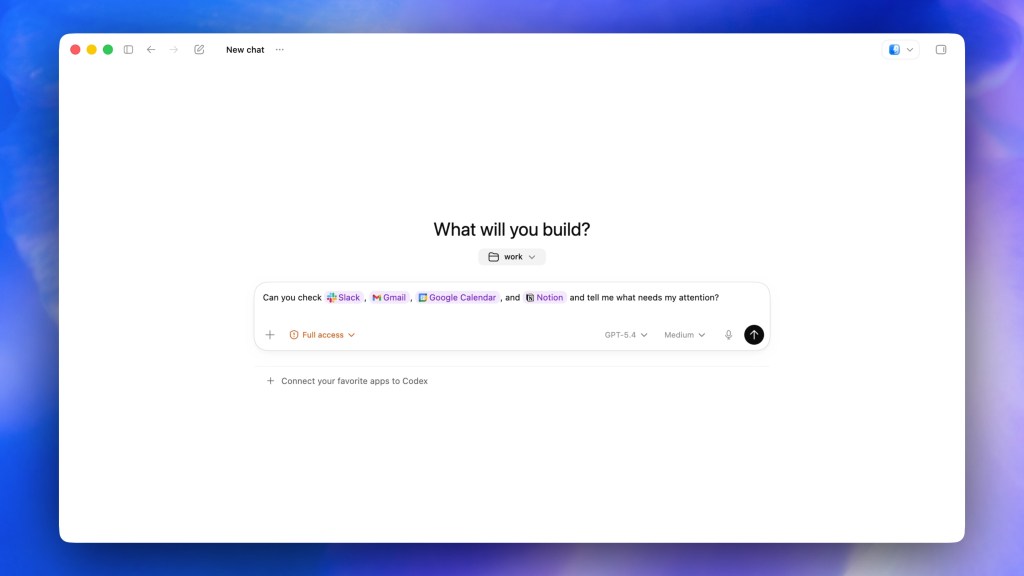
Using context from projects, related plugins, and memory, Codex can now suggest how to start your workday or where to pick up a previous project. For example, Codex can identify open comments in Google Docs that require your attention, extract relevant context from Slack, Notion, and your codebase, then present you with a prioritized action list.
These hints should improve with use as the Codex gains more context.
OpenAI recently introduced a new subscription designed for Codex users
In addition to improving the Codex desktop software, OpenAI was recently introduced A subscription designed for Codex users.
OpenAI’s $100/month Pro tier arrived last week. This is an upgrade from the $20/month plan and a cheaper upgrade than the $200/month Pro level.
The new Pro level is for “those who use advanced tools and models during the week with 5x higher limits than Plus”.
OpenAI says that at launch it will actually include “Plus with 10x Codex usage for a limited time.”
OpenAI shared last week that Codex has 3 million weekly users. That’s a 5x increase in three months with a 70% month-over-month usage increase.
Superapp ambitions with Codex
OpenAI suggests that future versions of Codex will refer more to general productivity use cases for non-engineering builders.
This follows OpenAI’s plan to create a “super application” that combines all of its technologies.
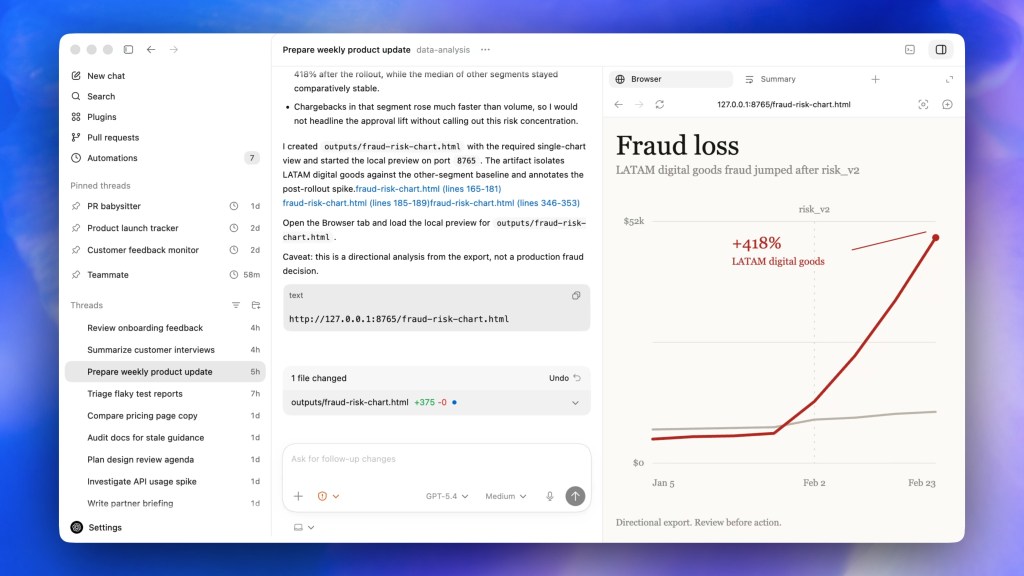
We see the beginnings of this today with background computing, in-app browsing, and integrated image creation.
Today’s Codex release is also the first Intel Mac support.
Learn more about the latest version of the Codex here. Codex for Mac is available for download here.


FTC: We use automatic affiliate links that generate income. More.