
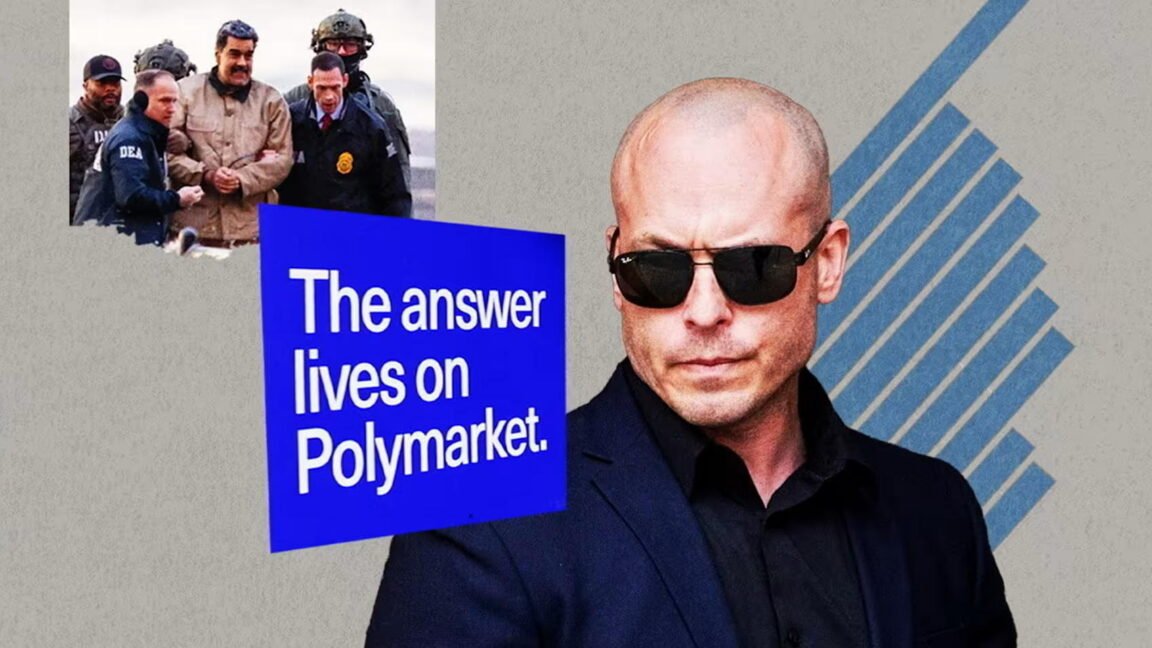
Polymarket’s main competitor, Kalshi, has been heavily promoting its efforts, including a partnership with market surveillance firm Solidus Labs, as it seeks to distance itself from Polymarket and emphasize its credentials as the largest regulated platform in the US.
Kalshi bans what he calls “violent markets, including war and kidnapping” — though he allows markets linked to the closure of the Strait of Hormuz — saying markets should not “encourage harm,” while requiring proof of identity. In contrast, Polymarket does not require most users of its international site to provide proof of identity and allows payment using anonymous cryptocurrency channels.
The increased scrutiny has created business for a wave of start-ups selling tools to help users profit by copying dubious “insiders.”
“Platforms are creating new rules to try to root them out and make it clear that they don’t allow this activity. This to me (…) proves that there is some informed flow in these markets worth watching,” he said.
Another startup, Polywhaler, promises to help traders “track big bets in real time” for $4.99 a month.
Polymarket itself published a list of the 10 most copied wallets in a blog post, including recommendations for traders on strategies to follow and pitfalls to avoid when trading copies.
The company and Kalshi have long claimed that their platform uses collective wisdom to accurately predict events. But another recent study found that prediction markets reflect the “wisdom of the informed few” rather than the “wisdom of the crowd.”
According to research led by Roberto Gomez Cram, associate professor of finance at the London School of Economics, only 3 percent of all accounts make up the bulk of price discovery.
These are traders whose accounts predict prices and react quickly to breaking news, making results more accurate for markets on Polymarket, a platform researched by researchers.
The rest do not “produce wisdom” and therefore are more likely to lose money. Instead, they fund skilled traders by generating most of the volume, “but little information,” and their losses flow as profits to the informed minority.
© 2026 The Financial Times Ltd. All rights reserved. May not be redistributed, copied or modified in any way.



