
The QX60 was Infiniti’s first three-row crossover, although it was called the JX35 when it went on sale in 2012. Its current name, QX60, refers to the 2014 model year and the then-updated naming structure for Infiniti’s vehicles. Since then, the QX60 has become one of Infiniti’s best-selling models, attracting families who need utility but want a more refined and premium cabin.
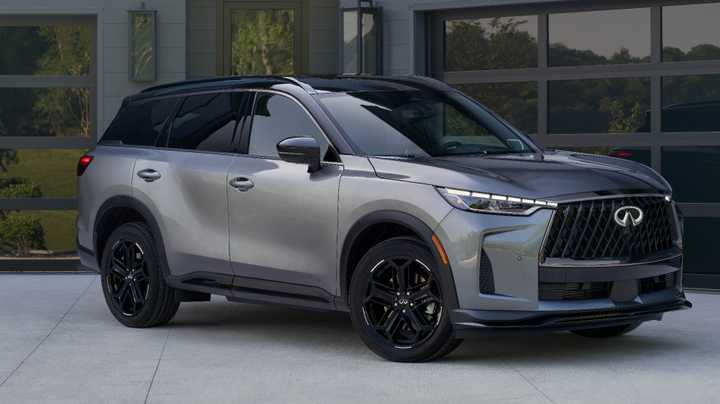
For the 2026 model year, the QX60 a mid term update this includes an update to its powertrain, the introduction of ProPILOT Assist 2.1 and a higher quality Klipsch audio system. The exterior is inspired by Infiniti’s Artistry in Motion design language, first seen on the QX Monograph Concept and production version. the redesigned QX80. Although smaller than the QX80, the QX60 still offers seating for seven via a second-row bench seat.
Similar to the QX60 Mercedes-Benz GLC It became one of the brand’s best-selling models after the GLK in 2015, bringing a more sophisticated aesthetic to the mid-size luxury segment. Now, Mercedes-Benz is ushering the nameplate into a new era with the first electric GLC. More than a powertrain change, it’s a major redesign that sets it apart from its internal combustion predecessors.
While one defines the luxury experience through its internal combustion engine and NASA-inspired ergonomics, the other seeks to attract buyers through its electrification and software-driven “Welcome Home” philosophy. Below, we take a closer look at how the 2026 Infiniti QX60 stacks up against the upcoming 2027 electric Mercedes-Benz GLC in terms of power, space and technology.
Initial price gap
A difference of nearly $10,000
Looking at the initial starting MSRP, there is a clear difference between these two luxury options:
- 2026 Infiniti QX60: MSRP (Net FWD) starting at $51,890
- 2027 Electric Mercedes-Benz GLC: Estimated starting MSRP of $60,000.
Infiniti offers a lower barrier to entry with a starting price nearly $8,000 lower than Mercedes-Benz.
At first glance, comparing a three-row midsize SUV like the Infiniti QX60 to a two-row midsize SUV like the GLC might seem like an uneven matchup. In the Mercedes-Benz line-up, the GLE is technically a sizeable rival to the QX60. But the story changes a bit when you look at the price tags.
The Infiniti QX60 offers seven passenger seats and more cargo capacity for less than the five-seat small electric GLC. Looking at the two together, we can see how much luxury and utility you can get for your money. For many families, the choice isn’t always between two cars in the same segment, but rather between factors such as seating rows, gas and electric, starting MSRP, and personal preference for exterior design.

- Main Trim Engine
-
2.0-liter turbo inline-4
- Main Trim Transmission
-
9-speed automatic
- Basic Trim transmission
-
Front wheel
Two different powers
Gasoline engine versus electrified platform
Infiniti ditched the QX60’s larger V6 for the 2025 model year, replacing it with a 2.0-liter variable compression turbo (VC-Turbo for short) that makes 268 horsepower and 286 lb-ft. torque. A turbocharged four-cylinder mated to a nine-speed automatic is again the standard engine for the 2026 model year, though Infiniti has added new mounting structures to reduce overall engine noise for a quieter ride.
What makes the VC-Turbo unique is its instantaneous compression ratio adjustment for the best possible power delivery and fuel economy. The design consists of a multi-link system that raises or lowers the pistons in real time in response to driver inputs. The VC-Turbo is smaller and more compact, translating into more interior room for the 2026 QX60.
Pure and Luxe trim levels come standard with all-wheel drive, while Autograph comes standard with all-wheel drive. Infiniti backs everything with a six-year/70,000-mile powertrain warranty and a four-year/60,000-mile bumper-to-bumper warranty.
The upcoming 2027 Mercedes-Benz electric GLC, specifically the GLC 400 4MATIC, takes a high-voltage approach with a focus on instant torque and long-range efficiency. Its twin-motor setup delivers 483 horsepower using an 85 kWh battery with silicon-anode chemistry to improve energy density and deliver a range of 342 miles in the WLTP cycle.
The 800-volt architecture supports DC fast charging to charge the battery from 10% to 80% in about 22 minutes. Mercedes-Benz offers a four-year/50,000-mile bumper-to-bumper warranty and an eight-year/100,000-mile battery warranty.
If you drive more miles than the average person, Infiniti’s 70,000-mile powertrain coverage offers more breathing room for traditional mechanical components. However, for those switching to electric, especially for the first time, the Mercedes-Benz battery warranty offers peace of mind.
NASA-inspired technology and digital elegance
Google built-in and AI assistants
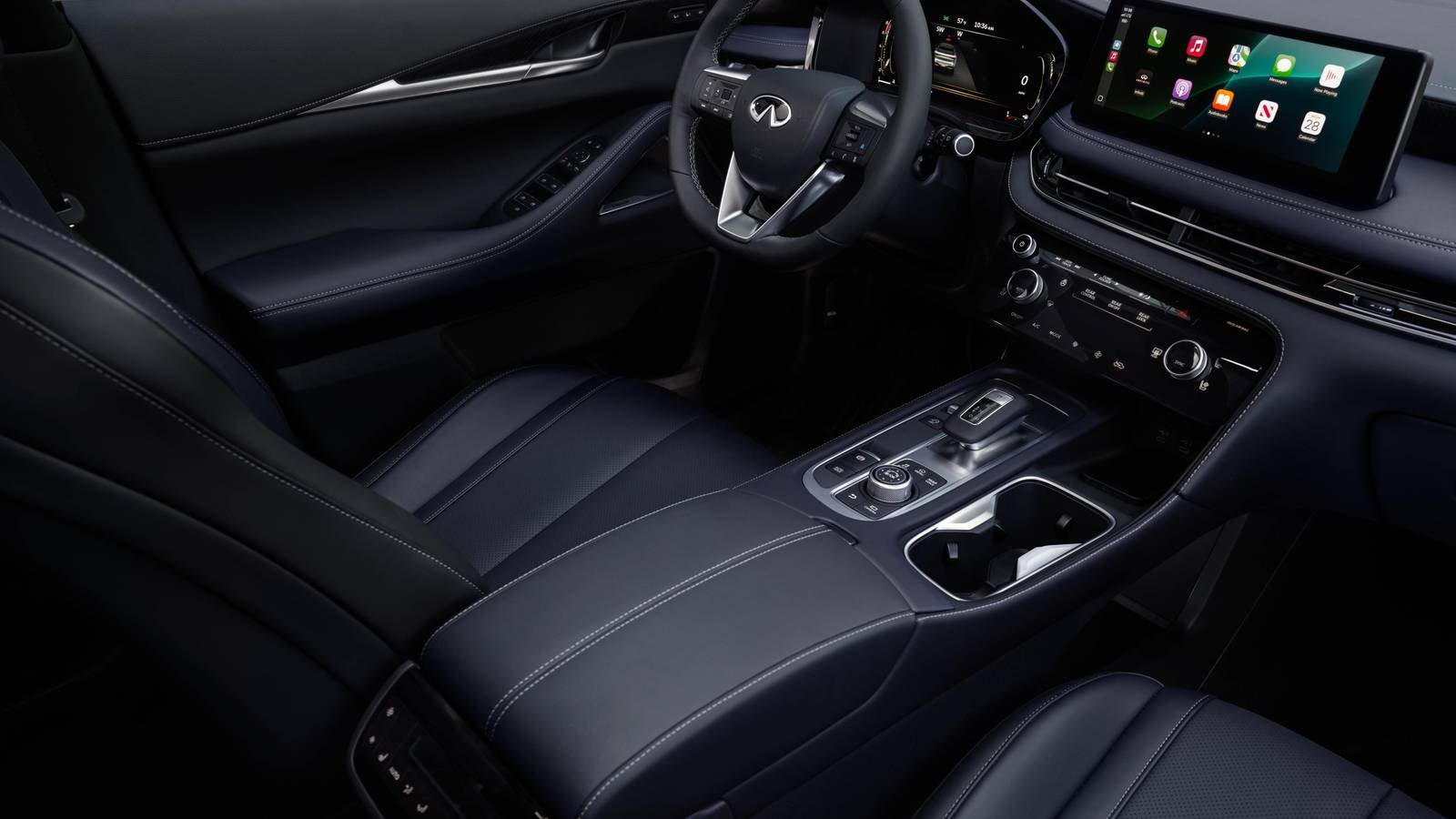
QX60 features Zero Gravity seatsDesign influenced by NASA research into neutral posture, or the natural position the body assumes in weightless environments. As the name suggests, Nissan used Ergonomic technology developed by NASA for astronauts. However, when this concept is transferred from a rocket to an SUV, it means less fatigue when driving long distances.
During long commutes, gravity usually puts constant pressure on the back and muscles, causing the aforementioned fatigue. These seats help maintain a neutral posture by using a unique shape and 14 different pressure points to support the spine from pelvis to chest. The result for the rider is reduced muscle fatigue and improved blood flow.
Inside the Autograph trims in particular, the focus on physical well-being is combined with open-pore ash wood and semi-aniline leather with kimono-inspired stitching, the latter being a favorite feature. Engineers working on the QX60 at Infiniti.
Mercedes-Benz meets this with a cabin that can be described as digital elegance. The electric GLC features an optional 39.1-inch MBUX hyperscreen that extends into the dashboard, creating a command center for the AI-driven virtual assistant.
Beyond the screens, the interior is designed as a sensory experience, featuring a panoramic roof that can illuminate 162 stars on glass at night. In terms of sustainability, the GLC offers a segment-first vegan interior certified by the Vegan Society, combined with acoustic foam in the chassis to reduce road and wind noise.
The technological innovation inside both models aims to make the driving experience more intuitive. The QX60 highlights seamless integration with built-in Google, bringing Google Maps and Assistant directly to the 12.3-inch touchscreen. This is supported by ProPILOT Assist 2.1 for highway handling and the Klipsch audio system.
Mercedes-Benz is powering an AI assistant that learns driver habits by taking a software-based approach with its MB.OS supercomputer. For audiophiles, the Burmester 4D system uses tactile sensors in the seats to let you physically feel the bass.
Between the QX60 and the GLC, their cabins meet very different priorities. The Infiniti QX60 is for the driver who values physical comfort, as it feels more like a premium saloon, with material quality and seat ergonomics taking center stage.
The Mercedes-Benz GLC, however, feels like a futuristic cockpit built for the driver who wants to immerse himself in technology. If you prefer how you feel physically after a five-hour drive, the Infiniti is likely to win; If you want the wow factor every time you start the car, the Mercedes can be beat.

- Material
-
Oxford
- Special Feature
-
Foldable
This 13.5 gallon trunk organizer has compartments to organize and store groceries, sports equipment, emergency supplies and other everyday essentials.
Cargo space and versatility
The QX60 has the upper hand
While both the QX60 and GLC offer room for owners, the Japanese SUV provides more general utility for larger groups and their belongings:
2026 Infiniti QX60 Cargo Space:
- Behind the third row: 14.5 cubic feet of space for groceries or small bags.
- Behind the second row: 41.6 cubic feet with the third row folded flat.
- Maximum capacity: 75.4 cubic feet of total volume with all rear seats folded.
2027 Mercedes-Benz GLC cargo area:
- Standard Capacity: About 20.1 cubic feet behind the second row.
- Maximum capacity: Up to 61.4 cubic feet with rear seats folded.
- Front Luggage: Adds an additional 4.5 cubic feet of storage space.
The 2027 electric GLC uses a flat battery floor to offer a respectable 61.4 cubic feet of total cargo space, a nice leap over previous gas versions. However, it still can’t compete with the QX60’s sheer volume.
While the frunk is a smart place to stash a charging cable or a small bag, the QX60 remains a better tool for actual portability. If you’re planning a week-long family road trip, the extra 14 cubic feet in the QX60 is the difference between everything that fits inside and having to buy a roof rack.
The QX60 is a strong alternative
Choosing between the two depends on your lifestyle, but the 2026 Infiniti QX60 emerges as the more practical winner for the modern family. While the electric Mercedes-Benz GLC benefits from all the latest technology, its two-row configuration and electric-only powertrain may still feel restrictive for those who need maximum versatility.
The QX60 certainly offers more than just about everything essential for everyday use: three rows, plenty of cargo space, and a best-in-class 6,000 lbs. towing capacity. When you combine that extra room with NASA-inspired seats and a gas engine that doesn’t require charging stops, the QX60 makes for a more flexible, comfortable package for the long haul.



