

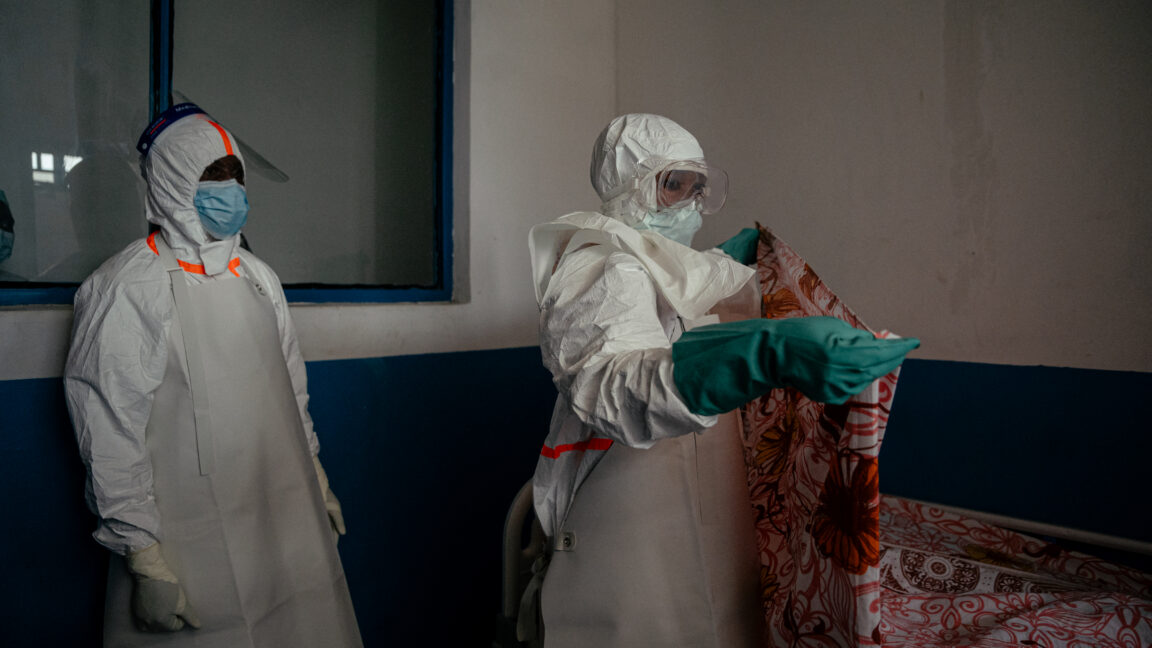
The Ebola outbreak in the Democratic Republic of Congo’s Ituri province continues to grow wildly, with nearly 750 infections, 177 deaths and nearly 1,400 contacts tracked, the World Health Organization said in a press briefing on Friday. The latest figures marked the third largest outbreak, although it was first reported a week earlier on May 15. And WHO Director-General Tedros Adhanom Ghebreyesus said the epidemic was still “spreading rapidly”.
Tedros added that the WHO’s revised assessment has moved the level of risk from “high” to “very high” at the national level, while the risk remains “high” at the regional level and “low” at the global level.
WHO officials have acknowledged that a delay in detecting and responding to the outbreak allowed it to take off, and they are now racing to get ahead of the virus.
WHO representative Dr. Speaking at today’s briefing from the DRC, Anne Ancia said that when officials arrived in the area, they found the virus “already spreading and has been spreading silently for several weeks”. In the investigation to date, the earliest known suspected case was a health worker who developed symptoms in Bunia, Ituri’s capital, on April 24. The WHO was only alerted to a potential outbreak on May 5 with news of a cluster of deadly, unknown infections that killed four health workers. By the time the WHO team arrived, there were already 80 cases.
“Now we’re chasing (the virus) to really try to get this outbreak under control, and because it’s still being transmitted, yes, the number of (cases) is going to continue to rise for a while until we can really get the whole response going,” he said.
Their work is complicated by various difficulties. The virus behind the Ebola outbreak is the rare Bundibugyo virus, which has no established vaccines or therapeutics. This leaves active case finding, isolation and contact tracing as the primary tools to stop the spread. Moreover, the virus is spreading in areas of armed conflict, highly mobile populations, weak health systems, where millions of people face acute hunger and need humanitarian assistance.



