
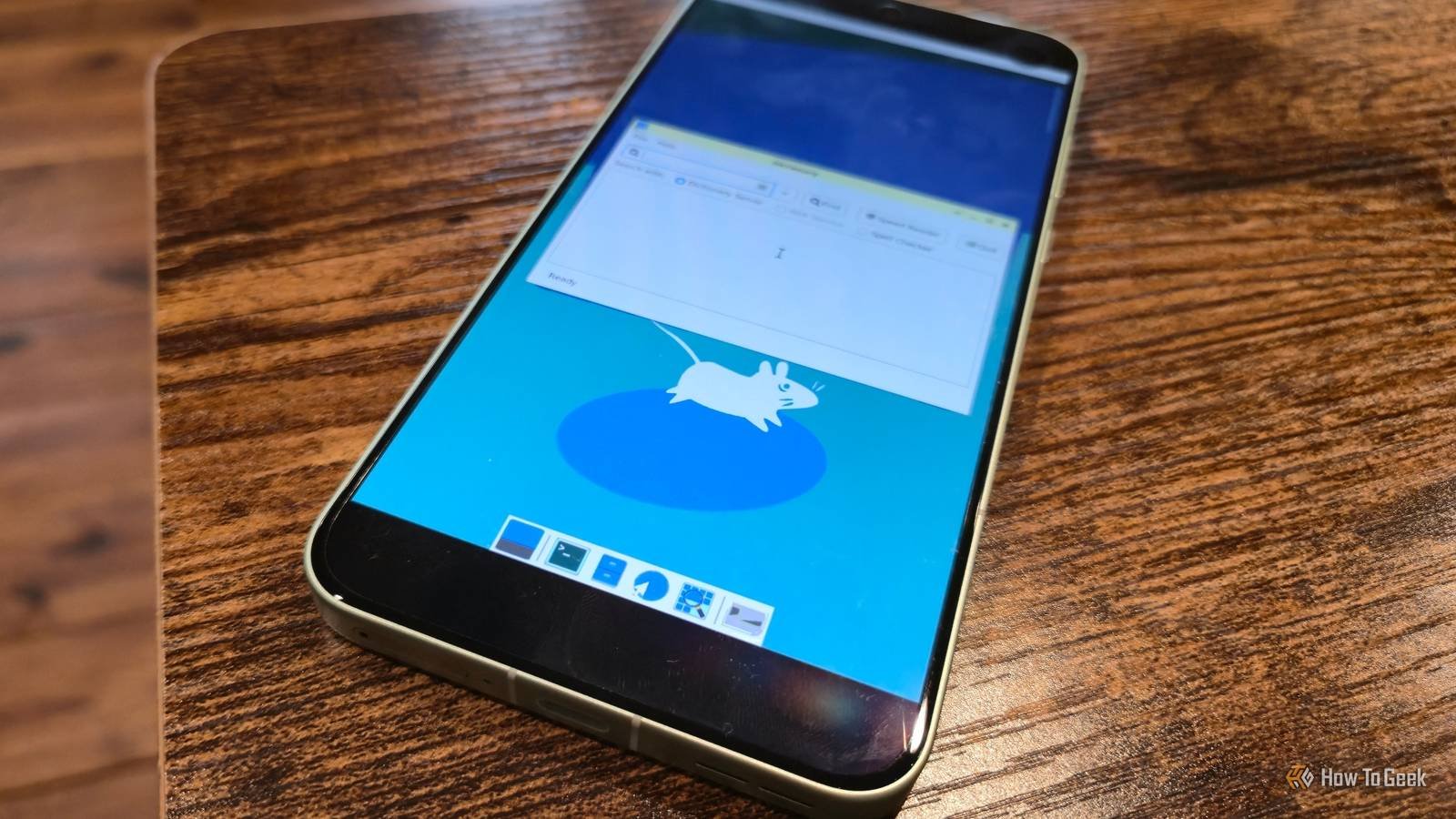
Android is based on Linux, but that doesn’t mean the two are the same. If you want to use desktop Linux apps on your Android phone, you have to jump through a few hoops. Fortunately, it’s not impossible and it’s getting easier every day.
Termux based programs
The most popular option

It may not seem surprising, but the most popular ways to launch a graphical Linux desktop on Android start with a command prompt. Termux is a basic terminal emulator for Android. It’s no longer available on the Play Store, but as an open source software, you still can Grab Termux from F-Droid.
Termux on its own won’t give you a Linux desktop or anything else, frankly. It’s only as powerful as the commands you give it.
Fortunately, graphical desktops are simply commands run from the terminal. The developers have created various programs that will run the Linux desktop through Termux so that you don’t have to develop this knowledge yourself. Some of the available options include AnLinux and Andronix. We described as the latter The easiest way to run a Linux distro on your phone.
To be clear, Andronix is not a one-stop solution. You will also need a VNC viewer such as Termux and such RealVNC to make things work.
Other standalone programs
If you don’t want to use Termux
There are other ways to get Linux on your phone that aren’t based on Termux. One such project is called Local Desktop.

The goal of the project is to run a fully graphical Linux desktop on your Android device. Basically, Android has a Linux kernel, which means it and desktop Linux manage processes and manage memory the same way. In addition, there are different file systems and libraries. Local Desktop solves this problem by replicating the bits of Linux that Android is missing so that the desktop sees all the dependencies it needs to run.
You don’t need to know all the complicated bits. This should be handled by the developer. All you need to do is install the app. It’s not available on the Play Store, but you can Download Local Desktop APK from Github.
Replace Android with Fedora
A fully developed method
There is a well-established effort to revive old phones using Linux PostmarketOS. If you have a OnePlus 6, for example, you can wipe its existing firmware and install Linux instead. The point is that PostmarketOS is primarily aimed at running mobile versions of desktop Linux, such as Phosh and Plasma Mobile. I first learned about PostmarketOS back in the days of my Pine Phone and Purism Librem 5.
The Fedora Project now uses a similar approach to install regular desktop Fedora on Android hardware. It is known as a project Fedora Pocketblue Remixand provides atomic and immutable Linux distroLike Fedora Silverblue. While the stated goal isn’t obviously to bring old hardware back to life, you’ll need a pretty old Android phone to get this particular project rolling. The oldest phone I own is the Pixel 6, which is still pretty new after a few years.
Inside the Android terminal
Bleeding margin

This last method is not yet ready for prime time, but it points to the most promising work being done to make it possible. Google’s Linux terminal app for Android to run graphics programs.
After installing the summer canary build of Android, Android Authority noticed a new button in the upper right corner of the terminal. Tapping this “screen” button sends graphical activity from the terminal to the corresponding Android. To make the magic happen, you type “weston” into the terminal, a command that may look familiar to Linux users familiar with the Wayland display server. This is actually the code that shows your programs.
Android Authority launched the old GNOME text editor Gedit alongside the GNOME Terminal window. This time, the writers didn’t feature Doom.

Does Google ever intend to make this the primary way everyone uses Android devices? No. Indeed, there is more than background work done in this process Connect ChromeOS to Android. But if Android devices have the ability to run full Linux desktop apps in a laptop form factor, that’s more interesting than running Linux on phones and tablets. For now, this pre-beta firmware is also only available on Pixel phones.
The master of your domain
Part of the fun of both Linux and Android is the ability to do whatever you want with them. Android may come with more limitations, but where there’s a will there’s a way, and the number of ways to get Linux on your Android phone continues to grow.



