

Are your Plex streams slow or stuttering? It’s probably not your Plex server at all, and it’s probably your home network. There are a few things to check before you go to the configuration and settings pages, because you probably don’t need to check there.
Your Plex server’s network connection is the most important
It should never be on Wi-Fi

You can run Plex on almost anything, but one thing is for sure, it should never be run on Wi-Fi.
Wi-Fi is a great technology and I love it. I rely on it for my daily work and it powers my entire household. However, there are mission critical services like Plex always connected to my network.
Wi-Fi is a great tool for using the Internet wirelessly, but nowhere near as stable as a wired connection. If I had to choose between a multi-gig Wi-Fi 7 connection and a wired gigabit Ethernet connection, I’d choose the wired connection every time.
A wired connection simply gives you a more stable experience and isn’t affected by the environment like Wi-Fi.
You may have the most powerful Plex server available, but if it’s on Wi-Fi, you may have a very poor streaming experience. So if your Plex server feels slow and you know it’s not hardware, check that it’s properly connected to a wired network and not Wi-Fi.
A bad Wi-Fi signal can be the downfall of any streaming setup
Your Plex server might have a good connection, but do you have a TV?
So your Plex server is connected to your network and has plenty of power, but you’re still experiencing slow streams? It’s highly likely that the device you’re watching it on doesn’t have a good Wi-Fi connection.
If you have a TV at the far end of the house, away from the router, you may simply not have the bandwidth to stream the content you want. While 720p and 1080p movies can be streamed on almost any connection, 4K content requires a slightly better connection.
There are many things to consider streaming media players or TVs have pretty weak Wi-Fi radios. Just because your phone or laptop works in a room doesn’t mean a TV or streamer will work well in this scenario.
Like the Plex server itself, it’s always best to make sure your streaming devices are connected whenever possible. In my personal setup, I can’t connect the Apple TV because of where it’s installed. However, I made sure there was solid Wi-Fi coverage in the room so I could stream 4K HDR content from my Plex server without issue.
Too many devices without enough bandwidth is equally bad
Straw is only so big

The last thing to check is whether it is on your network enough bandwidth to support all devices those on.
My uncle recently upgraded from a ten-year-old Netgear Orbi mesh Wi-Fi system to a UniFi Dream Router 7. He immediately noticed a huge speed difference when multiple devices were using the network at the same time.
Think of your network bandwidth as a straw, and all networking is done as a drink through it. Now imagine that you have a very small straw, like coffee grounds. You can get enough liquid by stirring the coffee to take a small sip, but no more.
Likewise, the legacy network doesn’t have nearly as much of a pipe to deliver content to your devices. If one person is downloading games from Steam or Xbox, another is streaming Netflix, and another is watching YouTube, there may not be enough bandwidth left for Plex to use.
On the other hand, imagine a nice McDonald’s straw. You know one. You can fit so many drinks into this straw that the other straws disappear. This is what a newer network feels like – enough bandwidth to move.
If you haven’t upgraded your network recently, chances are your network itself is starved of bandwidth, meaning your devices simply won’t work as intended.
Such a problem is almost invisible during normal web browsing or downloading files, but it definitely rears its ugly head when streaming content, which is why you see it when watching Plex.
-
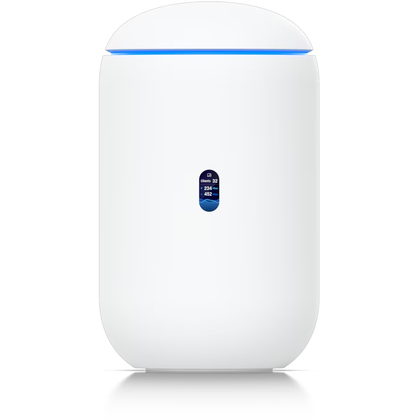
- Brand
-
Unifi
- Range
-
1,750 square feet
- Wi-Fi Groups
-
2.4/5/6GHz
- Ethernet Ports
-
4 2.5G
- USB Ports
-
None of them
- MU-MIMO
-
2×2 MU-MIMO
Unifi Dream Router 7 NVR capabilities, fully managed switching, built-in firewall, VLANs and more. is a full-fledged network device that offers With four 2.5G Ethernet ports (one with PoE+) and a 10G SFP+ port, the Unifi Dream Router 7 also has dual WAN capabilities when you have two ISP connections. It includes a 64GB microSD card for IP camera storage, but can be upgraded for more storage if needed. With Wi-Fi 7, you’ll be able to reach a theoretical network speed of 5.7 Gbps when using the 10G SFP+ port, or 2.5 Gbps when using Ethernet.
-
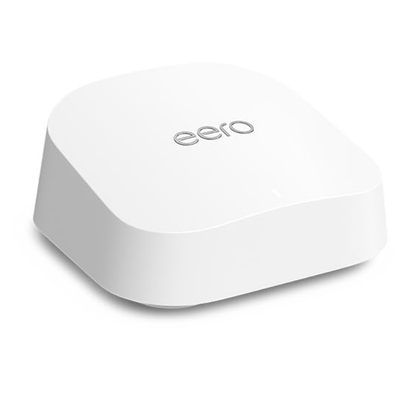
- Brand
-
eero
- Wi-Fi Groups
-
Dual-band Wi-Fi 7
- Ethernet Ports
-
2 x 2.5 GbE ports
- Mesh Network Compatible
-
Yes
Amazon’s Eero 7 router offers high-speed Wi-Fi 7 connectivity with up to 1.8 Gb of wireless bandwidth and a range of 2,000 square feet. It also has two 2.5 GbE ports, though it lacks 6GHz connectivity, which is unusual for a Wi-Fi 7 router.

Unless your Plex server is ancient, this is most likely not the cause of slow streams
Honestly, it’s pretty rare that the Plex server itself is the cause of bad streaming. Often the cause is somewhere else entirely – in this case your network.
So before diving into the Plex configuration options trying to figure out why it’s slow, make sure your network is up to the task.



