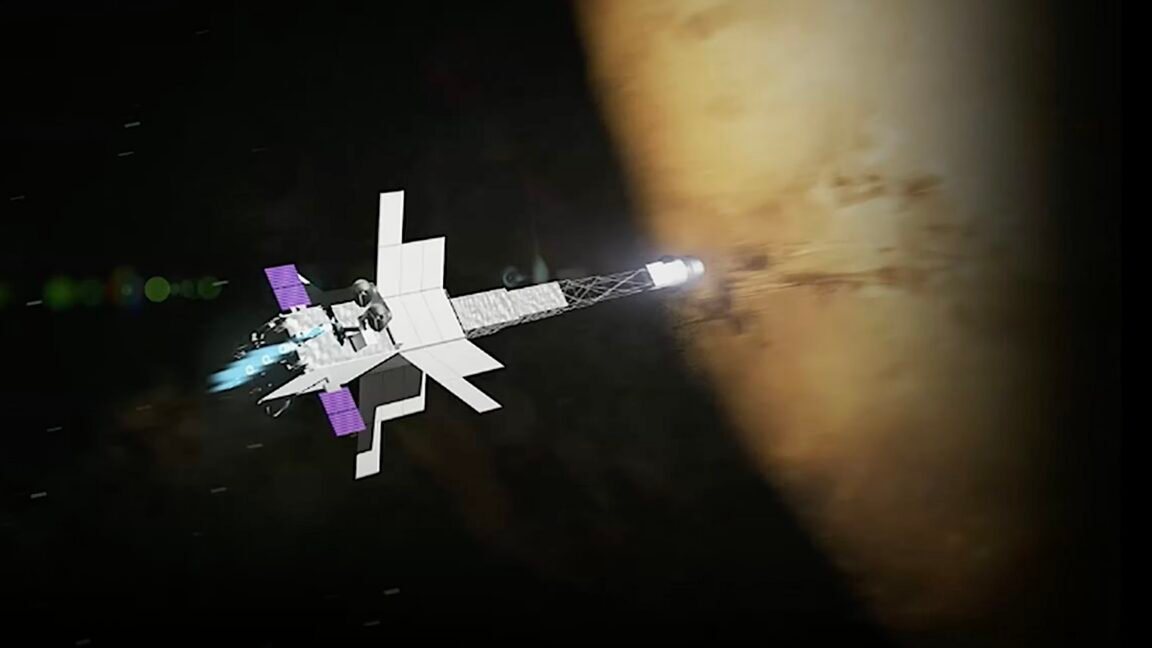
In addition to efficiency, a nuclear-electric propulsion system has the benefit of using conventional plasma thrusters. But instead of using solar energy to power the thrusters’ xenon fuel, the SR-1 will use electricity from a nuclear reactor.
“Our nuclear program, SR-1, is not about lobbying for billions of dollars to do an entirely new mission,” he said. “Frankly, we haven’t earned the right to do this after $20 billion of failed programs over time. So we’re taking equipment that’s already there, basically a built-in reactor, fuel that’s paid for over time.”
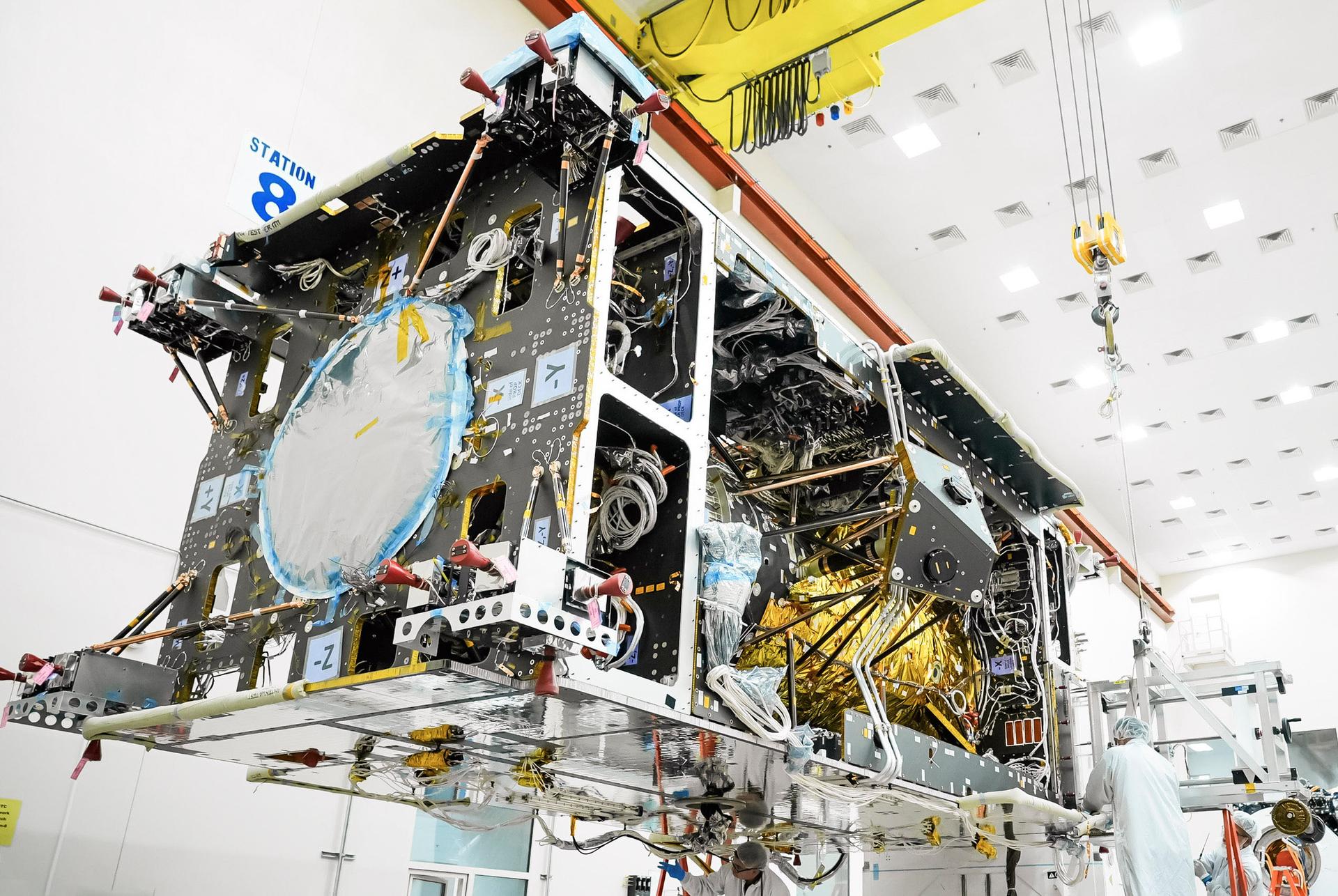
Under construction last year, Gateway’s Power and Propulsion Element will form the centerpiece of the SR-1 Freedom mission.
Credit: Lanteris Space Systems
Under construction last year, Gateway’s Power and Propulsion Element will form the centerpiece of the SR-1 Freedom mission.
Credit: Lanteris Space Systems
NASA officials have not disclosed the estimated cost of the SR-1 mission.
After proving nuclear propulsion works, “then you can come back and ask for more (funding) in the future when you show it can be done,” Isaacman said.
“The SR-1 Freedom primarily has a new system, a reactor, on an existing spacecraft bus,” Sinacore said. “The timeline will be on demand with the next Mars launch window in December 2028. Orbital mechanics are non-negotiable and scope must bend around this deadline.”
There are still some obstacles that will not be easy to overcome. Launching any major space mission, especially a new mission such as a nuclear engine demonstration, in less than three years will require considerable attention. resisting mission creepand almost perfect execution. Sinacore has laid out an ambitious timeline for the SR-1, with mission design completed by June and large-scale assembly beginning in early 2028. If the mission misses its launch opportunity in late 2028, the next Earth-Mars rendezvous will not occur until early 2031.
“We’re not trying to do everything,” Sinacore said. “For the first time, we are attempting the difficult task of operating a combined nuclear reactor, power conversion and electric motor propulsion system outside Earth’s orbit.”
Although NASA is the “prime integrator” for SR-1, actually releasing radioactive fuel into space requires input from multiple federal agencies, including the Department of Energy. Any rocket selected to launch a nuclear-powered mission must undergo special certification. SpaceX’s Falcon Heavy, which NASA originally ordered to launch the Gateway core module, is undergoing nuclear certification. Launch NASA’s Dragonfly mission Saturn’s moon Titana.



