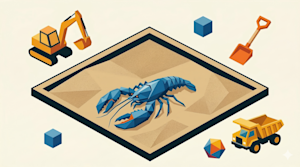
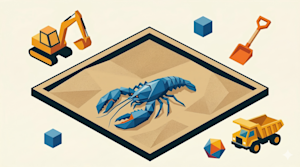
NanoClawAn open source AI agent platform created by Gavriel Cohen collaborates with a containerized development platform. Docker for allow teams to run agents inside Docker Sandboxesa step toward one of the biggest obstacles to enterprise adoption: how to give agents room to move without giving them room to damage the systems around them.
This announcement is important because the AI agent market is moving from innovation to implementation. It is no longer enough for an agent to write code, answer questions or automate a task.
The tougher question for CIOs, CTOs, and platform leaders is whether that agent can securely connect to live data, modify files, install packages, and work across business systems without exposing the host machine, adjacent workloads, or other agents.
That’s the problem NanoClaw and Docker are solving together.
Not just a packaging update, but a security argument
NanoClaw was launched as a security-first alternative in the fast-growing “claw” ecosystem, where agent frameworks promise extensive autonomy in on-premises and cloud environments. The main argument of the project is that many agent systems rely heavily on software-level safeguards when running too close to the host machine.
This Docker integration reduces this argument to infrastructure.
“The partnership with Docker integrates NanoClaw with Docker Sandboxes,” Cohen said in an interview. “The original version of NanoClaw used Docker containers to isolate each agent, but Docker Sandboxes are an enterprise-ready solution for securely deploying agents.”
This advancement is important because a key issue in enterprise agent deployment is isolation. Agents do not behave like traditional programs. They mutate their environments, install dependencies, create files, launch processes, and connect to external systems. This breaks many of the assumptions underlying conventional container workflows.
Cohen put it bluntly: “You want to unlock the full potential of these highly skilled agents, but you don’t want security to be based on trust. You need to have isolated environments and hard boundaries.”
This line now faces a broader challenge facing businesses experimenting with agents in production-like settings. The more useful agents are, the more access they need. They need tools, storage, external connections, and the freedom to act on behalf of users and teams. But every gain in capability increases security risks. A malicious or misbehaving agent cannot be allowed to infiltrate the host environment, expose credentials, or access the state of another agent.
Why agents crowd out conventional infrastructure
Docker president and COO Mark Cavage said the reality has forced the company to rethink some of the assumptions built into its standard developer infrastructure.
“Fundamentally, we had to change the isolation and security model to work in the agent world,” Cavage said. “It feels like normal Docker, but it’s not.”
He explained why the old model no longer holds. “Agents are effectively disrupting every model we’ve ever known,” Cavage said. “Containers accept immutability, but agents break it on the first call. The first thing they want to do is install packages, change files, spin up processes, spin up databases—they want full immutability and full machine running.”
It is a useful framework for enterprise technical decision makers. The promise of agents is not that they behave like static software with a chatbot front end. The promise is that they can do business openly. But open work creates entirely new security and management challenges. An agent that can install a package, rewrite a file tree, start a database process, or access credentials is more useful than a static helper. It is even more dangerous if it works in the wrong environment.
Docker’s answer is Docker Sandboxes, which use MicroVM-based isolation while maintaining familiar Docker packaging and workflows. According to the companies, NanoClaw can now run within that infrastructure with a single command, giving teams a more secure execution layer without having to redesign the agent stack from scratch.
Cavage articulated the value proposition: “It gives you a much stronger security margin. When something happens—because agents do bad things—it’s really limited to something that’s secure.”
The emphasis on protection over trust is consistent with NanoClaw’s original thesis. In earlier coverage of the project, NanoClaw was positioned as a leaner, more testable alternative to broader and more permissive frameworks. The argument was not only that it was open source, but also that it made it easy to think about its simplicity, secure it, and customize it for production use.
Cavage took this argument beyond any product. “Security is defense in depth,” he said. “You need every layer of the stack: a secure foundation, a secure framework to access, and secure what users build on top of.”
This will likely resonate with enterprise infrastructure teams less concerned with model innovation than with blast radius, auditability and layered controls. Agents can still rely on the intelligence of boundary patterns, but what is operationally important is whether the surrounding system can pick up on bugs, errors, or adversarial behavior without turning a compromised process into a wider incident.
Enterprise business for not one but many agents
The NanoClaw-Docker partnership also reflects a broader shift in how vendors are beginning to think about agent deployment at scale. Instead of one central AI system that does everything, the emerging model here is multiple limited agents operating across teams, channels, and tasks.
“What OpenClaw and claws are showing is getting a lot of value out of coding agents and general-purpose agents that are available today,” Cohen said. “Each team will manage a team of agents.”
He pushed this idea further in an interview, painting a future closer to the design of organizational systems than the consumer assistant model that still dominates much of the AI conversation. “In enterprises, each employee will have a personal assistant agent, but teams will manage a group of agents, and a high-performance team will manage hundreds or thousands of agents,” he said.
It’s a more useful enterprise lens than a typical consumer lens. In a real organization, agents are likely to connect to different workflows, data stores, and communication surfaces. Finance, support, sales engineering, developer productivity, and internal operations may all have different automations, different storage, and different access rights. A secure multi-agent future depends on aggregated intelligence rather than boundaries: who can see what, which process can touch which file system, and what happens when an agent fails or is compromised.
NanoClaw’s product design is built around this kind of orchestration. The platform sits on top of Claude Code and adds persistent storage, scheduled tasks, messaging integrations, and routing logic to assign work to agents across channels like WhatsApp, Telegram, Slack, and Discord. All of this can be configured from the phone without writing custom agent code, while each agent remains isolated in its own container runtime, the release says.
Cohen said the practical purpose of the Docker integration is to facilitate the adoption of that deployment model. “People will be able to go to the NanoClaw GitHub, clone the repository, and run a single command,” he said. “This will allow their Docker Sandbox to work with NanoClaw.”
Ease of installation is important because AI deployments in many enterprises still fail at the point where promising demos must be converted to stable systems. Security features that are too difficult to deploy or maintain are often overlooked. A packaging model that reduces friction without weakening boundaries is more likely to survive internal acceptance.
An open source partnership with strategic weight
It is also noteworthy that there is no partnership. It is not positioned as an exclusive commercial alliance or a financially tailored enterprise package.
“There’s no money here,” Cavage said. “We found it through the foundational developer community. NanoClaw is open source, and Docker has a long history in open source.”
This can strengthen the ad rather than weaken it. In infrastructure, the most reliable integrations often emerge because the two systems are technically compatible before they are commercially compatible. Cohen said the relationship began when a Docker developer advocate launched NanoClaw in Docker Sandboxes and demonstrated that the combination worked.
“We were able to deploy NanoClaw into Docker Sandboxes without making any architectural changes to NanoClaw,” said Cohen. “It just works because we had a vision of how to deploy and isolate agents, and Docker was thinking about the same security issues and came up with the same design.”
For enterprise buyers, this origin story suggests that integration is not forced by a go-to-market agreement. It offers a true architectural fit.
Docker is also careful not to use NanoClaw as the only framework it will support. Although NanoClaw appears to be the first “claw” included in Docker’s official packaging, Cavage said the company plans to work broadly across the ecosystem. The bottom line is that Docker sees a larger market opportunity around secure agent runtime infrastructure, while NanoClaw gains a more recognized enterprise foundation for its security position.
The bigger story: infrastructure reaching agents
The deeper significance of this announcement is that it shifts the focus from model capabilities to runtime design. This may be where the real enterprise competition is headed.
The artificial intelligence industry has spent the last two years proving that models can think, code and manage tasks of increasing complexity. The next step is proving that these systems can be deployed in a way that security teams, infrastructure leaders and compliance owners can live with.
NanoClaw has argued from the start that agent security cannot be locked at the application level. Docker now makes a parallel argument from the runtime side. “The world will need a different infrastructure to meet the demands of agents and artificial intelligence,” Cavage said. “Obviously, they’re going to be more and more autonomous.”
That may be the central story here. Businesses don’t just need more skilled agents. Better boxes are needed to house them.
For organizations experimenting with AI agents today, the NanoClaw-Docker integration provides a concrete picture of what this box could look like: open source orchestration on top, MicroVM-enabled isolation underneath, and a deployment model built around protection over trust.
In this sense, it is more than product integration. This is a blueprint for how an enterprise agent infrastructure might evolve: less focus on unfettered autonomy, more focus on limited autonomy that can interface with real production systems.



