
Summary
-
This tool converts fastfetch ASCII distro logos into rotating 3D objects displayed in the terminal.
-
It uses char density as a heightmap, computes normals, shades with Blinn-Phong, and adds a z-buffer.
-
It’s purely cosmetic, but it’s one of the coolest ways to show off your distro logo.
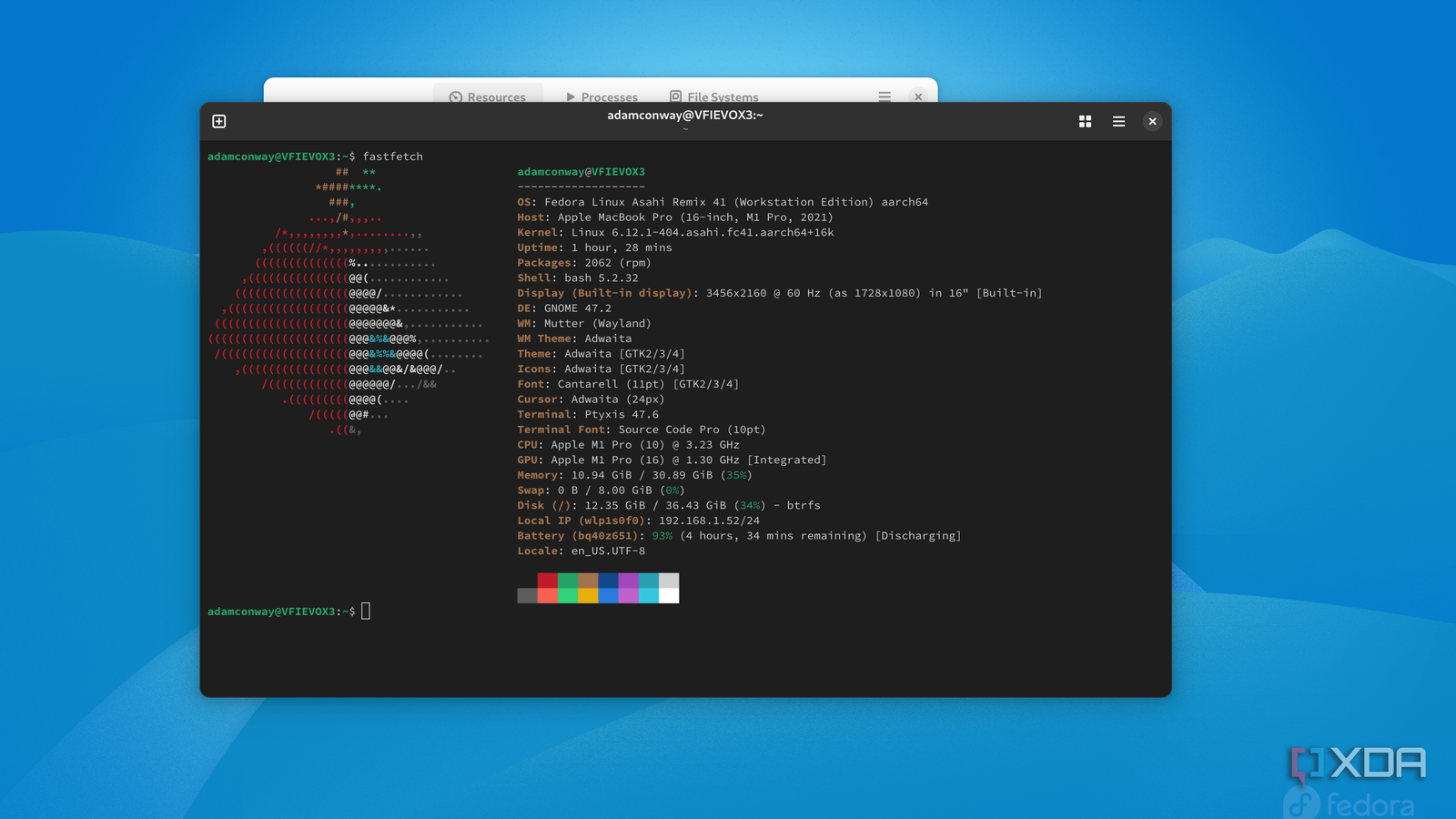
If you intend to show off the features of your Linux computer, you will use fastfetch. It’s easy to work with, it shows you all the information you need, and the little ASCII art of your chosen distro’s logo looks great on the side.
But what if I told you there’s a way to make your product look even cooler? At first it seems impossible; after all, how can perfection be achieved? Well, someone found a way, and it’s by flipping that awesome ASCII logo around. Does it increase absorption? No. Will the rotating logo actually show up when you screenshot your specs? Not at all. Are you going to install it anyway? Absolutely.

Viewing your system properties has never been so interesting

On the Linux subreddit, user areofyl demonstrated his custom fetch tool. He uses fastfetch to create a program that takes the distro’s logo data, adds a Blinn-Phong shader to it, and then rotates it. It has no practical use, but hey, this is Fastfetch we’re talking about here; looking cool is half the reason people use it.
Here are all the details:
A neofetch/fastfetch alternative has been developed that takes the distro’s ASCII logo and displays it as a rotating 3D object in the terminal with system information next to it.
It uses symbol density as a heightmap (M is heaviest, points are lightest), takes surface normals from the gradient, and renders with a Blinn-Phong shader + z-buffer. ~640 lines C depends on libm + fastfetch for system information.
The tool will automatically detect which distro you’re using, then pull its logo from Fastfetch. The creator claims that it works with any distro, and if you get a little tired of the spinning logo, pressing a button or CTRL-C will stop it. If you want to read more about this project or install it on your machine (and I don’t blame you), head over to its page. GitHub page for more information.




