The Swedish “deeptech” company has signed a Grant Agreement with the European Commission under the EU Innovation Fund and opened 40.3 million euros of the 83 million euro project to increase the annual capacity of the Tibro plant to 23,000 tons by 2030.
The material has already been approved by NATO and is being shipped to customers in construction, defense, electronics and transportation.
PaperShell is a composite What looks and sounds impossible on paper is fitting because it’s actually made of it.
The Swedish company presses sheets of kraft paper impregnated with a bio-binder derived from agricultural waste into load-bearing components that the company says are stronger than plastic, lighter than aluminum and more versatile than fiberglass composites.
Its pilot plant in Tibro, Sweden has been operational since 2023 and has shipped more than 150,000 components. The material has been approved by NATO and is already used in construction, electronics, defense and transport.
On Friday, the company announced that it had signed a Grant Agreement with the European Commission EU Innovation FundIt provides grant funding of up to 40.3 million euros.
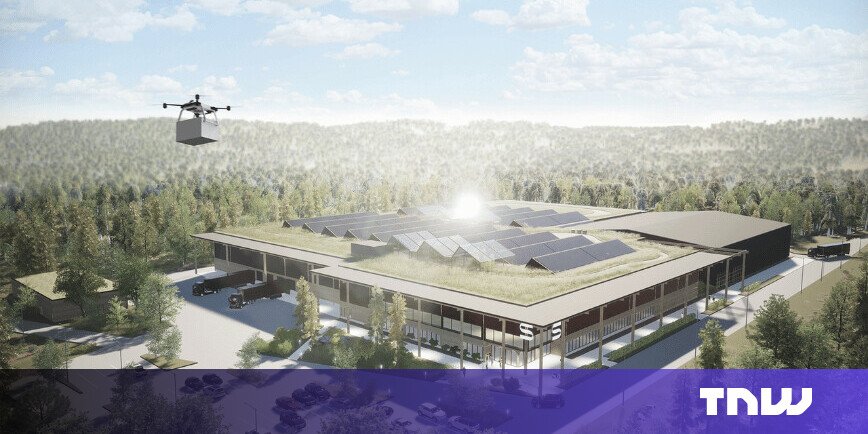
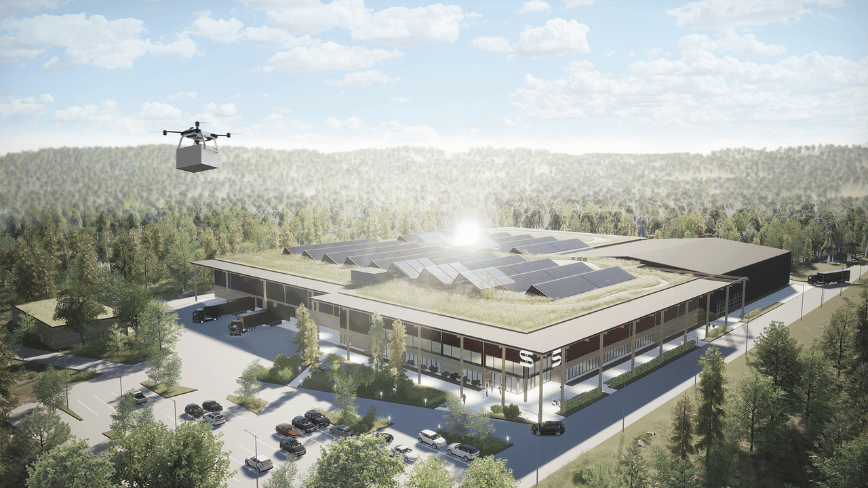
The grant is part of a €83 million project to expand PaperShell’s existing Tibro facilities into a new full-scale flagship factory, the first full implementation of a production system the company intends to replicate across Europe.
Construction is expected to begin in 2027, with full operations scheduled for 2030. At that point, the facility will have an annual production capacity of 23,000 tons and is projected to prevent approximately 2.6 million tons of CO₂ emissions in its first decade.
The EU Innovation Fund, which is funded by the revenues of the EU Emissions Trading System, is one of the largest funds in the world. climate-innovation programsand PaperShell was selected out of 359 applicants in the Medium category of the Net Zero Technologies challenge run by CINEA.
The company was first informed that it had been invited to prepare a Grant Agreement in November 2025, a step that required it to demonstrate co-financing for the remaining €43 million of the €83 million project cost.
The composition of the material gives it a number of properties that are commercially attractive in the current European industrial context.
Aluminum replacementplastics with fiberglass composites or PaperShell material reduce CO₂ equivalent emissions by up to 98%, the company says, with the potential for carbon-negative performance in closed-loop systems.
The factory in Tibro will house multiple automated production lines on an area of 15,600 square meters, one of which is dedicated to copper clad laminates and printed circuit boards, a strategic materials category given Europe’s reliance on Asian PCB supply chains.
Sectors currently using PaperShell material include building facade panels, transportation components, defense components and consumer electronics.
Anders Breitholtz, who founded PaperShell after more than two decades as a technology explorer specializing in materials and manufacturing, previously described the grant as a defining moment for the company and for decarbonisation in European industry more broadly.
The company’s pilot plant has been operational since 2023 and a fully subscribed financing round closed in December 2025 to support the co-financing request.
The new flagship factory in Tibro is clearly designed as a template: the production system is modular and intended to be reproduced in other areas of Europe once the model has been proven at scale.