

Between its incredible virtualization capabilities, thriving community of tinkerers, and amazing support for home lab-related tools, I have plenty of reasons to be a member of the Proxmox faction. But I especially love that the genius developers behind Proxmox continue to release new features with each update without requiring premium subscriptions or increasing hardware requirements.
After all, Proxmox 9 SDN added Fabrics and overhauled the mobile UI to the point where it’s completely possible to control virtual guests from a smartphone, while PVE 9.1 improved the snapshot feature and brought much-needed (still somewhat experimental) support. OCI container images. Compared to the past few updates, the updated Linux kernel might seem like the biggest highlight of Proxmox VE 9.2 for people with single-node installations. But if, like me, you have a high-availability Proxmox cluster in your availability arsenal, then you’ll be happy.
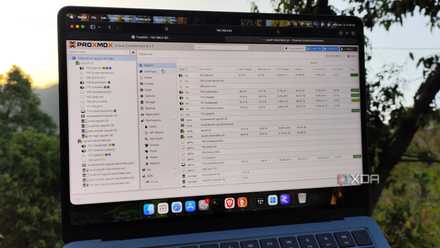
Cluster Resource Scheduler has a new load balancer
One that can dynamically adjust virtual guest migration
Until now, the Cluster Resource Scheduler supported only two modes: basic/default and static. The latter uses the total resources consumed by the virtual guest to gauge the best node for migration tasks, while its counterpart simply migrates the newly HA-configured VM or LXC to the node with the least active workload. While these methods aren’t terrible for (especially static) HA migration tasks, the real problem comes when the original host comes back online.
Let’s say you have a setup like mine, where the master node is significantly more powerful than the other two (or more) systems in the cluster. So when you leave the secondary nodes, you will probably use the primary workstation to host the virtual guests high availability assignments. If node numero uno goes down, CRS migrates the LXCs and VMs you added to the HA token to other nodes. But when it comes back online, the weak systems will be forced to start your virtual environments, while the main system will be idle, leaving you with a skewed cluster configuration. For clusters with many virtual guests, you’ll have to manually migrate everything once the primary server is online – and as someone who tends to break the primary workstation with DevOps projects, migrating LXCs and VMs back was a huge headache.
This is where the newly added dynamic load balancer comes into the equation. Instead of deciding where to migrate LXCs and VMs when a node is offline, it also calculates the load on each system when the host restarts, thus preventing virtual guest imbalances that can occur in static and primary profiles. Needless to say, there are additional settings in the CRS configuration section, including automatic rebalancing capability, imbalance threshold, balancing method, etc.
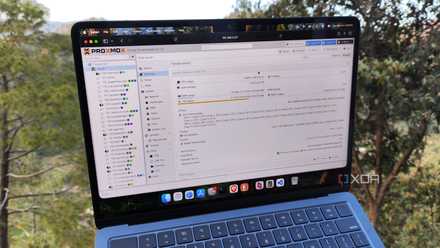
The new HA disarm mechanism makes maintenance tasks much safer
You can choose between two disarming modes

Along with the dynamic load balancer, Proxmox 9.2 added a new HA disarmer that disables the high availability manager… Temporarily, that is. Performing random node maintenance tasks while the HA manager takes care of your virtual guests and their affinity rules can cause unwanted migrations or accidentally force the host to fence.
With the disarming technique, you can safely perform maintenance tasks without worrying about the HA manager messing up the cluster. Disarm Mode Freeze stops the state from changing and the cluster stops reacting to failed nodes, making it better for situations where nodes need to work. Another disarm mode, Ignore, prevents HA tracking for virtual guests and is intended for use when you need to shut down the entire cluster.
Technically, you can use this build with pve-ha-manager version 5.1.3 in April. ha-manager ignores crm-team disarm-ha andha-manager crm-team is disarm-ha don commands, but PVE 9.2 adds simple toggles for disarm modes within the HA tab.
PVE 9.2 also improves the SDN stack
And it brings the CPU profile management tool

While cluster-oriented features take center stage in the latest Proxmox update, PVE 9.2 has a few other tricks up its sleeve. The SDN stack now includes route maps for BGP/EVPN filtering and support for Border Gateway Protocol and WireGuard, the latter of which is especially useful for people who want to connect multiple nodes over a secure VPN.
The Datacenter section then has a custom CPU model utility that allows you to store processor-related flags and parameters in reusable profiles. Since this is a cluster-centric update, the flag selector explicitly shows the flag match on each node processor, so you don’t set the wrong architecture configurations for your virtual guests, and you don’t waste minutes when migrated VMs don’t run on a different PVE host. If you’re wondering, yes, I speak from experience.



