

- Google (Google Play)
- Honor (HONOR App Market)
- OPlus (OPPO App Market)
- Samsung (Galaxy Store)
- Transsion (Palm Store)
- vivo (V-Appstore)
- Xiaomi (GetApps)
Developers will also have access to new APIs to make it less difficult to register as an external developer. In the coming months, Google will release the Android Developer ID Status API, which will check whether a package name is already registered with Google. The Android Developer Console API will allow you to register and manage your app package names without leaving your development environment.
The countdown begins
The next step towards app verification will take place this month, as Google rolls out the new system service to most certified devices. The package (com.google.android.verifier) will appear on phones and tablets running Android 8 or higher and will allow Google to block the installation of unverified apps. It will remain inactive until verification is enabled in your specific region.
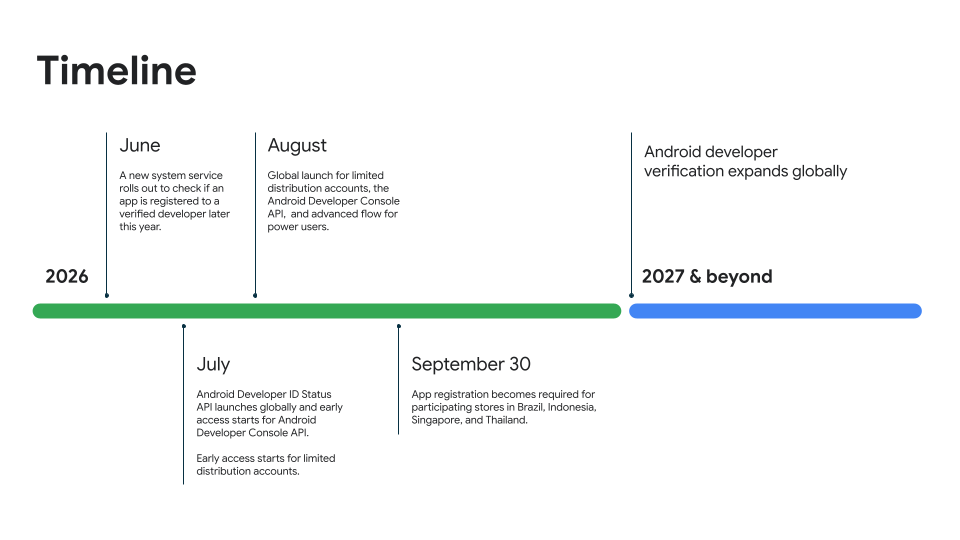
In July, Google plans to introduce new developer APIs and begin testing for “limited distribution” accounts. This is Google’s solution for hobbyists who want to create their own apps and share them with a small group. Limited accounts won’t require a fee or government ID verification, but you can install these apps on up to 20 devices.
In August, the advanced streaming will be available globally before the verification becomes mandatory in the first markets. as detailed a few months agoadvanced flow will allow users to bypass verification, but the process is not easy. You have to go to a hidden menu, confirm multiple times that you understand the risks, and wait all day before completing the process.
Which brings us to September, when Android devices in Brazil, Indonesia, Singapore, and Thailand will start checking their verification status before installing apps. But after that, things get dark. With millions of users suddenly limited to verified apps, Google will no doubt monitor how verification works, which could affect its progress. Google has said it intends to expand developer verification in 2027, eventually making it a global device policy.



